
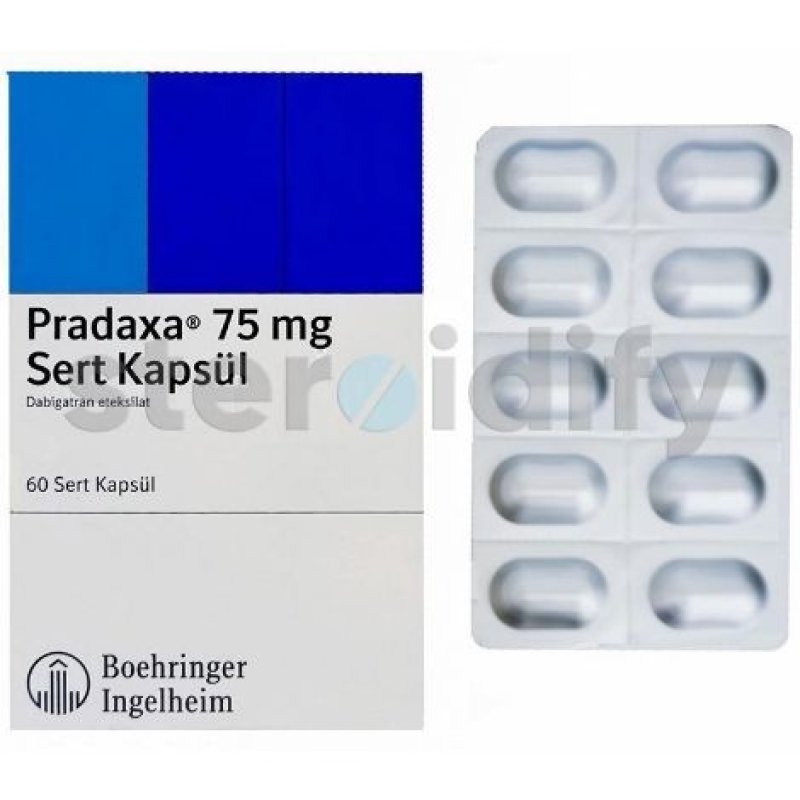
Overview of PRADAXA Boehringer Ingelheim and its main properties
PRADAXA Boehringer Ingelheim is an anticoagulant medication primarily used to reduce the risk of stroke and blood clots in patients with non-valvular atrial fibrillation, a common heart rhythm disorder. It contains the active ingredient dabigatran etexilate, which acts as a direct thrombin inhibitor. This mechanism of action helps prevent the formation of blood clots, making it a critical treatment option for individuals with specific cardiovascular risks.
One of the main characteristics of PRADAXA is that it is administered orally, allowing for convenient self-administration compared to other anticoagulants that may require injections. The medication is available in capsule form, which enhances patient compliance and ease of use. Additionally, PRADAXA is absorbed quickly by the body, leading to rapid anticoagulation effects. Its half-life is relatively short, allowing for flexibility in adjusting doses when necessary.
PRADAXA is also notable for its predictable pharmacokinetics, which means that standard dosing can be reliably used without the need for regular monitoring of anticoagulation levels, a requirement for some other anticoagulants. This unique property makes it appealing to both patients and healthcare providers as it streamlines the management of anticoagulation therapy.
Dosage guidelines and intake regimen
The effectiveness of PRADAXA Boehringer Ingelheim relies heavily on properly following dosage guidelines and intake regimens. The typical recommended dose for most adults is 150 mg taken orally twice a day. However, in certain populations, such as patients with severe renal impairment or those at increased risk of bleeding, a lower dose of 75 mg taken twice daily may be recommended. It is essential for patients to consult with their healthcare provider to determine the most appropriate dosage based on individual circumstances.
When taking PRADAXA, it is advisable to swallow the capsules whole with a full glass of water. Patients should not chew, crush, or open the capsules, as doing so can alter the medication’s effectiveness. Additionally, taking PRADAXA with food may help reduce the incidence of gastrointestinal side effects, making it easier for patients to tolerate the medication.
Moreover, maintaining a consistent schedule of taking PRADAXA is crucial. If a dose is missed, patients should take it as soon as they remember, unless it is close to the time for the next scheduled dose. In such cases, they should skip the missed dose and resume the regular dosing schedule. It is vital never to double the dose to catch up, as this could increase the risk of bleeding or other adverse effects.
Advantages and practical benefits of PRADAXA Boehringer Ingelheim for athletes
Beyond its use in managing specific cardiovascular conditions, PRADAXA Boehringer Ingelheim has garnered attention in the sports community for its potential benefits among athletes. Its ability to effectively reduce the risk of thrombus formation can be advantageous for individuals undergoing intense physical training or competition, especially those who may have pre-existing conditions that elevate their risk for blood clots.
Here are some key benefits or practical advantages of using PRADAXA for athletes:
- Rapid onset of action that allows athletes to maintain peak performance without prolonged wait times for medication effects.
- Easy oral administration promotes compliance during training and competition without the complications of injections.
- Consistent dosing regimen eliminates the need for frequent blood monitoring, making it easier for athletes to manage their care.
- Reduced risk of venous thromboembolism which can be a concern during periods of intense physical activity.
- Flexibility with dosing timing provides athletes with options to align their medication with their training schedule.
While these advantages make PRADAXA appealing to some athletes, it is essential for them to consult with healthcare professionals familiar with their medical history and needs. A thorough evaluation helps determine if PRADAXA is the right choice in a competitive sports environment.
What to pay attention to when using this medicament
Despite the effectiveness and advantages of PRADAXA Boehringer Ingelheim, there are several important considerations to keep in mind when using this medication. It is critical for patients to consult with a healthcare provider before starting treatment, particularly if they have any pre-existing medical conditions, are taking other medications, or have a history of bleeding disorders.
Patients should be aware of potential contraindications, which include individuals with active bleeding, severe renal insufficiency, or those with a mechanical prosthetic heart valve. Additionally, PRADAXA is not recommended for pregnant women, as there may be risks to fetal development. Caution is also advised for nursing mothers, as it is unclear whether the medication is excreted in breast milk.
People with specific health issues, such as a recent history of gastrointestinal bleeding, liver disease, or conditions requiring frequent invasive procedures, should discuss these concerns with their doctors before initiating treatment with PRADAXA. Furthermore, patients should always inform their healthcare providers of any other medications they are taking, including over-the-counter drugs and supplements, as these can interact with anticoagulants and increase the risk of adverse effects.
In conclusion, while PRADAXA Boehringer Ingelheim presents numerous benefits for specific patient populations, including athletes, careful consideration and medical supervision are essential to maximize its effectiveness while minimizing risks. Regular consultations and adherence to medical advice are vital components of a safe and effective treatment plan.
| Features | |
| Active substance | Dabigatran |
| Also known as | Dabigatran |
| Blood pressure | Typically does not affect blood pressure |
| Chemical name | N-{2-[4-(N'-{[(Hexyloxy)carbonyl]carbamimidoyl}carbamimidoyl)phenylaminomethyl]-1-methyl-1H-benzimidazol-5-ylcarbonyl}-N-pyridin-2-yl-beta-alanine ethyl ester |
| Dosage (medical) | 150 mg or 110 mg twice daily depending on renal function |
| Dosage (sports) | Not applicable as it is not used for sports enhancement |
| Effects | Reduces the risk of stroke and systemic embolism in patients with non-valvular atrial fibrillation |
| FORM | 60 caps x 75 mg |
| Formula | C34H41N7O5 |
| Half-life | 12 to 17 hours |
| Hepatotoxicity | No significant hepatotoxicity |
| Lab Test | Monitoring of renal function and possibly coagulation parameters |
| Main action | Anticoagulant |
| Side effects | Bleeding, gastrointestinal upset, heartburn, nausea |
| Storage conditions | Store at room temperature away from moisture and heat |
| Substance class | Direct thrombin inhibitor |
| Trade name | Pradaxa |
| Use in sports | None, as it does not enhance athletic performance |
| Water Retention | No significant water retention |
| Manufacturer | Boehringer |