
What Defines Lipril 10 mg Lupin
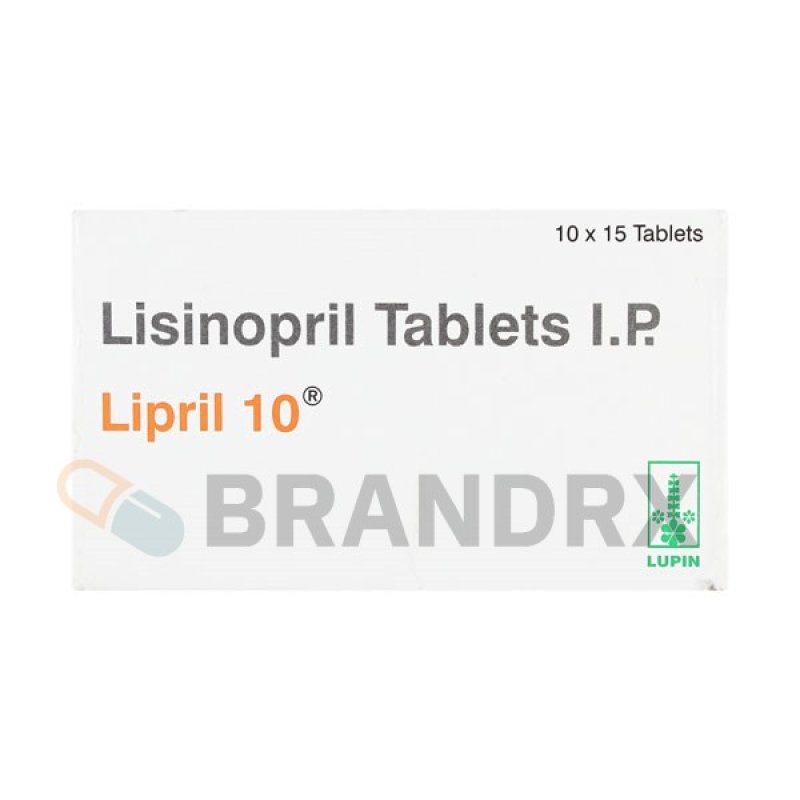
Lipril 10 mg Lupin is a pharmaceutical product designed primarily for the treatment of hypertension (high blood pressure) and certain heart conditions. Its active ingredient, lisinopril, belongs to a class of medications known as angiotensin-converting enzyme (ACE) inhibitors. This class works by relaxing blood vessels, allowing blood to flow more easily, thus lowering blood pressure and reducing the workload on the heart. The potency of Lipril 10 mg Lupin stems from its ability to inhibit the conversion of angiotensin I to angiotensin II, a substance that constricts blood vessels and raises blood pressure. As a result, it enhances vascular relaxation and improves blood flow throughout the body. One of the key characteristics of Lipril is its once-daily dosing, making it convenient and easy to incorporate into a patient’s daily routine.
Types and Formats of Available Pharmaceutical Products
Lipril is available primarily in tablet form, allowing for oral administration. While Lipril 10 mg is a common dosage, the product may also come in different strengths to accommodate varying patient needs. This versatility is essential in managing individual patient profiles, as some may require higher or lower doses based on their unique health circumstances. Furthermore, Lipril can be found in both brand and generic formulations, providing options for affordability and accessibility. In addition to the 10 mg tablet, it is critical for healthcare providers and patients to consult each specific product's labeling to ensure the correct formulation and dosage are being utilized.
Key Differences Between Lipril 10 mg Lupin and Other Related Substances
When comparing Lipril 10 mg Lupin to other medications within the ACE inhibitor class, several distinctions become apparent. One significant difference involves its pharmacokinetic profile, which refers to how the drug is absorbed, distributed, metabolized, and excreted in the body. This specific formulation may exhibit variations in bioavailability, dosing frequency, and side effect profiles when juxtaposed with alternatives such as enalapril or ramipril. Additionally, Lipril 10 mg Lupin is known for its favorable side effect profile and well-documented efficacy in clinical settings, which may not be paralleled in some other related medications. For patients specifically seeking to manage their hypertension effectively while minimizing adverse reactions, Lipril 10 mg Lupin could be an optimal choice. Its established track record makes it a reliable option for healthcare providers when tailoring treatment plans for their patients.
Long-Term Effects and Safety Considerations
The long-term effects of using Lipril 10 mg Lupin can lead to significant improvements in cardiovascular health and overall quality of life for patients suffering from high blood pressure. Regular intake can help reduce the risk of serious complications such as stroke, heart attack, and kidney damage related to uncontrolled hypertension. Nonetheless, it is essential to recognize potential contraindications and precautions. For example, Lipril may not be suitable for pregnant or breastfeeding women due to potential risks to the fetus or infant. Additionally, individuals with known allergies to lisinopril or other ACE inhibitors, those who are experiencing significant renal impairment, or those with a history of angioedema should avoid this medication. Consulting a healthcare professional is critical to ensure that Lipril 10 mg Lupin is appropriate for individual health conditions and circumstances.
Practical Advice on Choosing and Using Lipril 10 mg Lupin Correctly
When considering the use of Lipril 10 mg Lupin, it is vital to follow certain guidelines to ensure safe and effective treatment. Before starting the medication, patients should engage in an open dialogue with their healthcare provider, discussing any existing health conditions, allergies, and other medications currently being taken. Monitoring blood pressure regularly is crucial for assessing the drug's effectiveness and ensuring safety throughout the treatment process. Patients should adhere strictly to the prescribed dosage and schedule, making adjustments only as directed by their healthcare professional. In situations where doses are missed, it is advised not to double up but rather to take the missed dose as soon as remembered or wait until the next scheduled dose. Remember to store Lipril in a cool, dry place away from direct sunlight and out of reach of children. Educating oneself about potential side effects, and maintaining prescribed check-ups will also contribute to a successful treatment experience with Lipril 10 mg Lupin.
| Features | |
| Active substance | Lisinopril |
| Also known as | Zestril |
| Blood pressure | Effectively lowers systolic and diastolic blood pressure |
| Chemical name | (2S)-1-[(2S)-6-amino-2-[[(1S)-1-carboxy-3-phenylpropyl]amino]hexanoyl]pyrrolidine-2-carboxylic acid |
| Dosage (medical) | Typically starts at 10 mg once daily, may increase to 20-40 mg daily based on response |
| Dosage (sports) | Not applicable as it is not used for performance enhancement |
| Effects | Reduces blood pressure, improves symptoms of heart failure |
| Formula | C21H31N3O5 |
| Half-life | Approximately 12 hours |
| Hepatotoxicity | Rare, but liver enzyme elevations could occur |
| Lab Test | Blood pressure monitoring, kidney function tests, and electrolyte levels |
| Main action | Lowers blood pressure by inhibiting the angiotensin-converting enzyme |
| Side effects | Cough, dizziness, headache, extreme low blood pressure, kidney dysfunction, hyperkalemia |
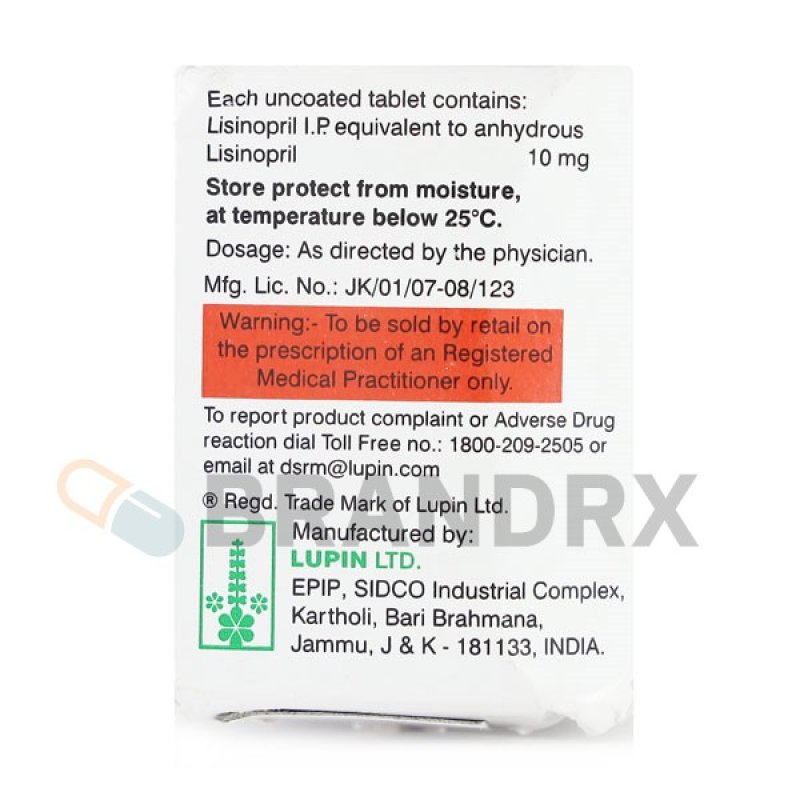
| Storage conditions | Store at room temperature, away from moisture and heat |
| Strength | 10mg |
| Substance class | ACE inhibitor |
| Trade name | Prinivil, Zestril |
| Use in sports | None, not a performance-enhancing drug |
| Water Retention | Unlike other blood pressure medications, it does not cause water retention |
| Manufacturer | Lupin Ltd. |
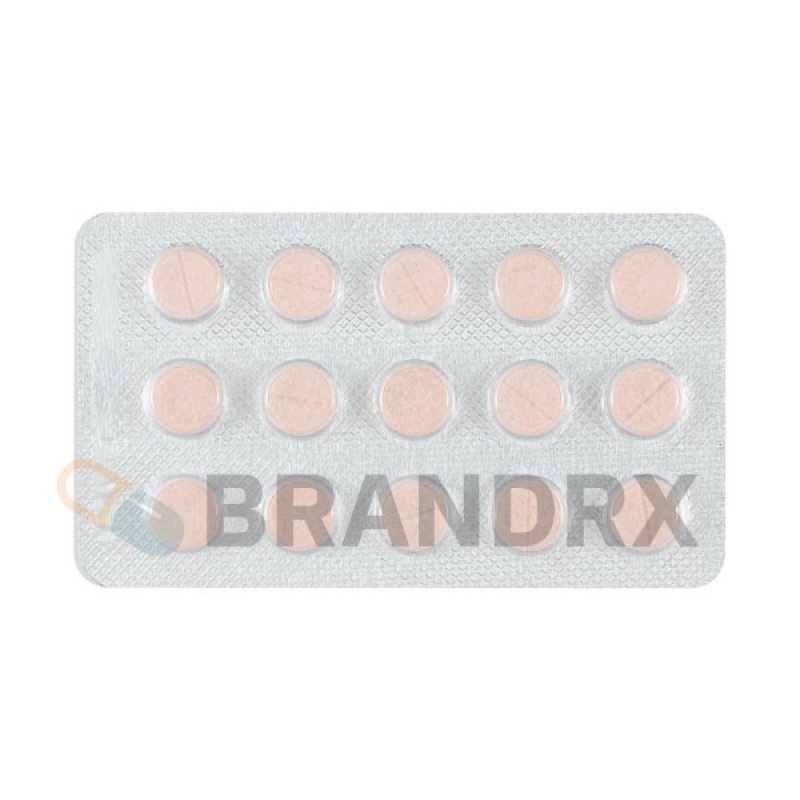
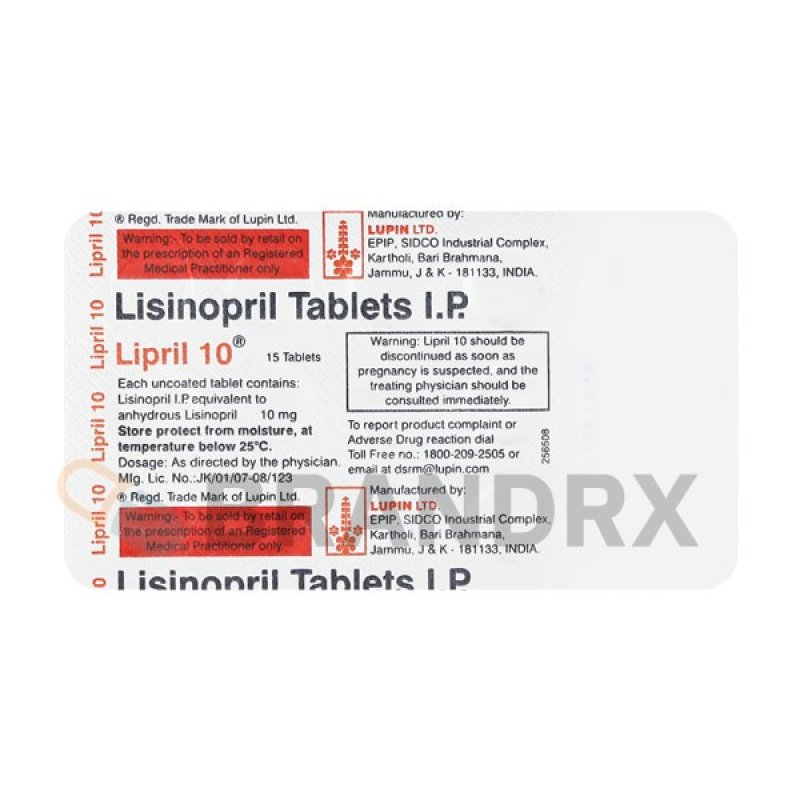
| Packing | 15 tabs/blister |