
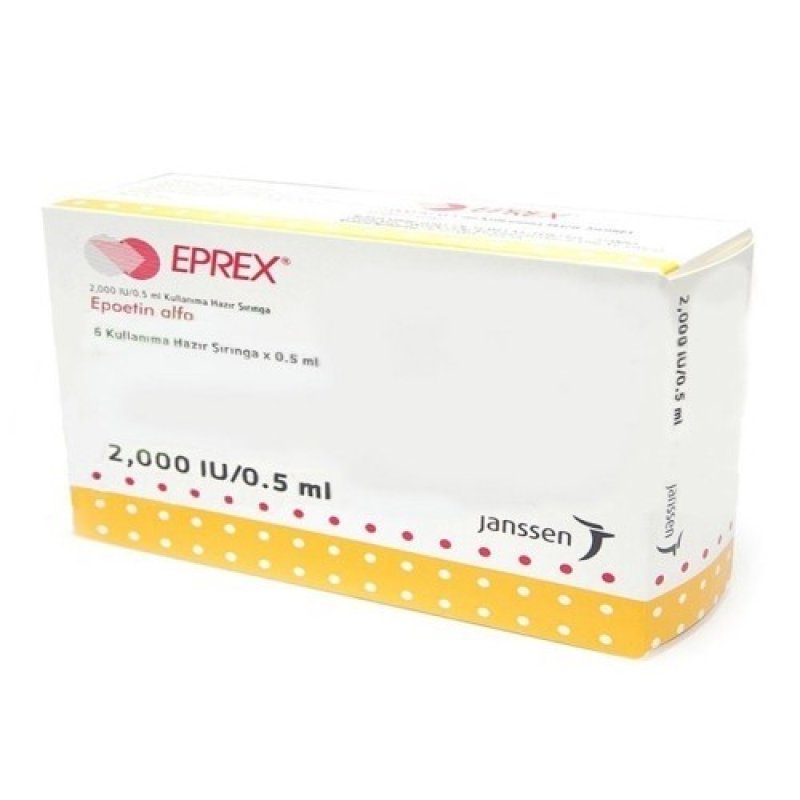
Eprex 0.5 Ml 2000 Iu Janssen-Cilag: Overview and Main Purpose
Eprex 0.5 Ml 2000 Iu Janssen-Cilag is a medical product primarily designed to treat anemia associated with chronic kidney disease and various other medical conditions. It contains erythropoietin, a naturally occurring hormone that stimulates the bone marrow to produce more red blood cells. This product is particularly beneficial for patients who are undergoing dialysis or are in a state of significantly reduced red blood cell production due to their chronic illnesses. Eprex can help improve energy levels and overall quality of life by increasing hemoglobin levels in the blood.
The primary purpose of Eprex is to facilitate the restoration of normal erythropoiesis in patients suffering from reduced erythropoietin production. By doing so, it helps mitigate symptoms of anemia, such as fatigue, weakness, and pale skin, which are commonly associated with low hemoglobin levels. Eprex is administered via injection, providing a reliable route of delivery for those who may have difficulty with oral medications. The efficacy and safety profile of this treatment has been established through clinical studies, making it a trusted option in the management of anemia.
Typical Users and Contexts for Application
The users of Eprex 0.5 Ml 2000 Iu Janssen-Cilag predominantly include individuals diagnosed with chronic kidney disease (CKD), particularly those who require dialysis. These patients often experience anemia as a result of their kidneys' inability to produce adequate amounts of erythropoietin, which necessitates treatment to maintain sufficient red blood cell count. Additionally, patients with certain types of cancer or those undergoing chemotherapy may also be prescribed Eprex to counteract anemia caused by their treatment.
In a clinical setting, healthcare professionals may recommend Eprex for individuals who show signs of significant anemia, such as low hemoglobin concentrations or those at risk of developing potential cardiovascular complications due to anemia. This includes not only patients with CKD but also victims of traumatic blood loss, those with prior surgical interventions that may affect blood levels, and people suffering from chronic inflammatory diseases that detrimentally affect blood cell production.
Furthermore, individuals who may benefit from Eprex also include those with congenital anemia or other conditions leading to a decrease in red blood cells. Its administration is characterized by careful monitoring by healthcare providers to ensure effective and safe dosage based on specific patient needs. Eprex is valuable in hospital settings, outpatient care environments, and specialized clinics focused on kidney disease and cancer management.
Strengths and Distinguishing Characteristics of Eprex 0.5 Ml 2000 Iu Janssen-Cilag
Eprex 0.5 Ml 2000 Iu Janssen-Cilag has several strengths that set it apart from other available erythropoiesis-stimulating agents. One of its notable characteristics is its formulation, which has been optimized for enhanced absorption and bioavailability, thereby ensuring a more effective response in patients. Another important distinguishing feature is its consistent track record of safety, which has been supported by extensive clinical research and patient outcomes over the years.
Additionally, Eprex is available in a pre-filled syringe, making it convenient and easy to administer, whether in clinical settings or at home. This user-friendly delivery method allows for precise dosing, which is crucial in the management of anemia where maintaining the right hemoglobin level is essential.
Compared to other erythropoietin products, Eprex demonstrates fewer side effects and a lower incidence of allergic reactions, making it a preferred choice for patients with sensitivities. Its long-acting formulation implies that patients may require fewer injections, thus contributing to compliance and adherence to treatment plans. This is particularly beneficial for patients who experience discomfort with regular injections or for those who are concerned about time spent during medical appointments.
Benefits of Eprex 0.5 Ml 2000 Iu Janssen-Cilag
Eprex 0.5 Ml 2000 Iu Janssen-Cilag provides numerous benefits for patients requiring treatment for anemia. Here is a concise overview of its key advantages:
- Enhanced red blood cell production, leading to improved oxygen delivery to body tissues.
- Alleviation of anemia-related symptoms such as fatigue, weakness, and dizziness.
- Improvement in the overall quality of life for patients suffering from chronic illnesses.
- Convenient administration through pre-filled syringes that allow for self-injection.
- Reduced frequency of injections due to the long-acting formulation, promoting better adherence to treatment.
- Established safety profile with fewer side effects compared to alternative treatments.
- Indicated for a range of conditions beyond chronic kidney disease, providing versatility in treatment approaches.
- Strong clinical evidence supporting efficacy, derived from substantial clinical trials and patient experiences.
These advantages make Eprex a vital component in the management of anemia in various medical contexts, addressing the underlying issue of erythropoietin deficiency effectively and safely.
Important Considerations Before Use of Eprex 0.5 Ml 2000 Iu Janssen-Cilag
Before initiating treatment with Eprex 0.5 Ml 2000 Iu Janssen-Cilag, several important considerations must be taken into account. Patients should be assessed for potential contraindications, including any known allergies to the product or its components. Furthermore, individuals with uncontrolled hypertension, or those who have a history of seizures, should exercise caution, as these conditions may be exacerbated by the use of this medication.
It is also vital to monitor patients for therapeutic response and potential adverse effects throughout treatment. Regular blood tests to measure hemoglobin levels and avoid excessive increases are recommended, as overly rapid corrections of anemia can result in cardiovascular risks. Patients should discuss their complete medical history with their healthcare provider, including other medications they are taking, to avoid any adverse interactions.
Lastly, pregnant or breastfeeding women should consult with their healthcare provider before using Eprex, as the effects during pregnancy and lactation are not fully understood. In conclusion, thorough discussions with healthcare professionals and careful consideration of individual health circumstances are essential steps before starting treatment with Eprex.
| Features | |
| Active substance | Erythropoietin |
| Also known as | EPO |
| Blood pressure | Can cause an increase in blood pressure |
| Category | Pharma Grade |
| Chemical name | Erythropoietin |
| Dosage (medical) | Typically 50-300 units/kg three times a week, dose adjusted based on hemoglobin levels and patient response |
| Dosage (sports) | Misuse can involve 20-50 IU/kg of body weight, three times per week |
| ean13 | 1399747472492 |
| Effects | Increases red blood cell count, enhances oxygen transport and aerobic capacity |
| FORM | Injection |
| Formula | Not applicable as it is a glycoprotein |
| Half-life | Varies, typically 4-13 hours depending on the type (recombinant forms) |
| Hepatotoxicity | None reported |
| Lab Test | Detection via specific blood tests (e.g., EPO doping test, isoelectric focusing) |
| Main action | Stimulates erythropoiesis (production of red blood cells) |
| Reference | SPRM051 |
| Side effects | Hypertension, thrombosis, increased risk of stroke, headache, flu-like symptoms |
| Storage conditions | Refrigerated, typically between 2-8В°C |
| Substance class | Hormone, specifically a growth factor |
| Trade name | Epogen, Procrit, Eprex, others |
| Use in sports | Banned - used to increase endurance and performance |
| Water Retention | Minimal |