
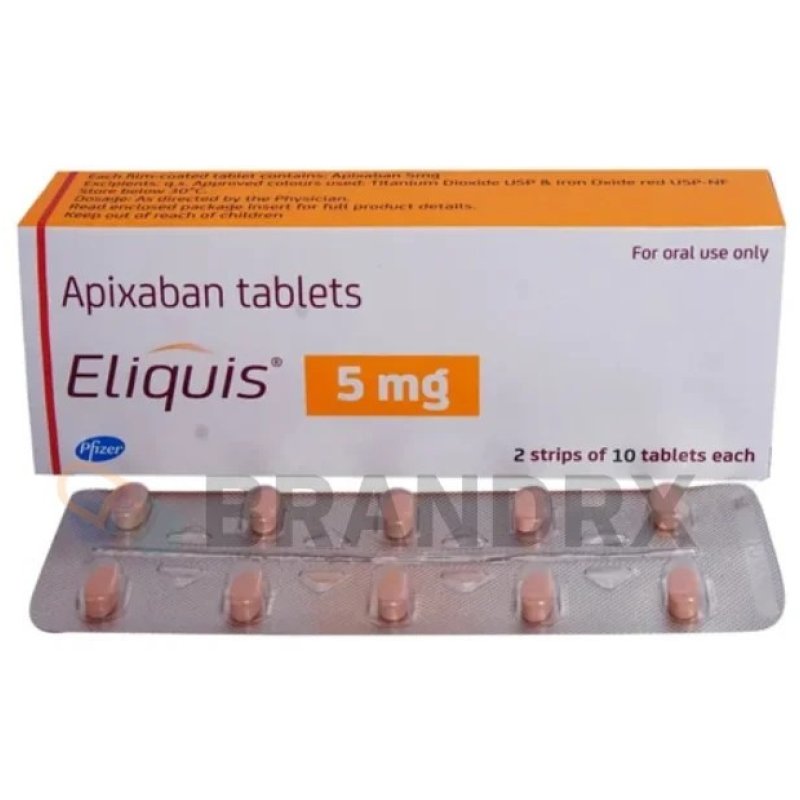
Overview of Eliquis 5 mg Pfizer and its main properties
Eliquis 5 mg Pfizer is a prescription medication that is primarily used to reduce the risk of thromboembolic events, such as stroke, in individuals with non-valvular atrial fibrillation. It belongs to a class of drugs known as direct oral anticoagulants (DOACs), specifically functioning as a factor Xa inhibitor. This mechanism works by preventing the formation of blood clots, thereby maintaining smooth blood flow within the cardiovascular system.
Among its key characteristics, Eliquis 5 mg Pfizer is noted for its rapid onset of action and predictable dosage response, which allows for convenient oral administration without the need for routine coagulation monitoring that is typically required for older anticoagulants like warfarin. The drug is absorbed quickly in the gastrointestinal tract, with peak plasma concentrations reached within a few hours after administration. Eliquis also has a shorter half-life compared to some other anticoagulants, which can be advantageous in particular clinical situations where rapid reversal of anticoagulation may be necessary.
Furthermore, Eliquis has been shown to reduce the risk of major bleeding events compared to traditional therapies, making it a preferred choice for many healthcare providers. It is generally well-tolerated, but like all medications, it may come with certain side effects that patients should be aware of.
Dosage guidelines and intake regimen
The dosage of Eliquis 5 mg Pfizer is carefully determined based on individual patient factors, including age, weight, renal function, and the specific condition being treated. For patients with non-valvular atrial fibrillation, the typical recommended dose is 5 mg taken orally twice daily. However, for patients who meet specific criteria, such as those who weigh less than 60 kg, are aged 80 years or older, or have moderate renal impairment, a reduced dose of 2.5 mg twice daily may be recommended.
It is crucial for patients to adhere strictly to the prescribed dosing regimen. Eliquis should be taken at the same times each day to maintain steady drug levels in the body. If a dose is missed, it should be taken as soon as remembered on the same day, but if it is almost time for the next dose, the missed dose should be skipped. Doubling up on doses to make up for missed ones is not advisable, as it can increase the risk of bleeding complications.
Healthcare providers may also recommend periodic monitoring of renal function, especially in older patients or those with a history of renal issues. It is essential for patients to communicate openly with their healthcare team about any other medications they are taking or any changes in their health status, as certain drug interactions can potentially affect the efficacy and safety of Eliquis.
Advantages and practical benefits of Eliquis 5 mg Pfizer for athletes
Eliquis 5 mg Pfizer is recognized not only in clinical settings but also among athletes, particularly those who may be at risk of developing blood clots. The advantages of using Eliquis in an athletic context hinge on its formulation and efficacy, making it approachable for those who are not just in need of anticoagulation but are also looking to maintain optimal performance levels.
- Rapid anticoagulation action helps in quick recovery from thromboembolic events.
- No need for routine monitoring allows athletes to focus on training schedules without interruptions.
- Predictable pharmacokinetics ensures consistent blood thinning effects, which helps in maintaining performance.
- Lower risk of major bleeding complications compared to some traditional anticoagulants.
- Convenient oral administration simplifies the intake process during competitions or strenuous training periods.
Furthermore, Eliquis may be particularly suitable for athletes who have underlying conditions that predispose them to clot formation, such as prior thromboembolism, certain genetic disorders, or those who have undergone recent surgery. Its quick onset and ease of use make it a valuable option for maintaining cardiovascular health without compromising athletic performance.
What to pay attention to when using this medicament
While Eliquis 5 mg Pfizer has many advantages, it is essential to note several important considerations and potential contraindications. Before starting this medication, patients must consult with healthcare professionals to assess their overall health status, particularly regarding liver and kidney function, as these can significantly influence drug metabolism and clearance.
Patients with active bleeding disorders, those with a history of significant bleeding, or those at high risk of experiencing thromboembolic events should avoid using Eliquis unless closely monitored by a healthcare provider. Additionally, pregnant and breastfeeding women are typically advised against using Eliquis due to potential risks to the developing fetus or nursing infant. The same caution applies to children, as safety and efficacy in this population have not been established.
Patients should also be aware of several drug interactions that can either increase the risk of bleeding or reduce the efficacy of Eliquis. Medications such as non-steroidal anti-inflammatory drugs (NSAIDs), other anticoagulants, herbal supplements like St. John's Wort, and certain antifungal medications may interfere with Eliquis's action. As such, it is crucial to discuss all medications and supplements being taken with a healthcare provider before starting treatment.
In summary, while Eliquis 5 mg Pfizer is a highly effective anticoagulant medication for both the general population and athletes, it must be used with careful consideration of individual health factors, potential interactions, and under the guidance of healthcare professionals to ensure optimal safety and efficacy.
| Features | |
| Also known as | BMS-562247 |
| Blood pressure | Generally has no effect on blood pressure |
| Chemical name | 1-(4-methoxyphenyl)-7-oxo-6-[4-(2-oxopiperidin-1-yl)phenyl]-4,5,6,7-tetrahydro-1H-pyrazolo[3,4-c]pyridine-3-carboxamide |
| Dosage (medical) | Typically 5 mg twice daily, may vary based on renal function and patient characteristics |
| Dosage (sports) | Not applicable |
| Effects | Reduces the risk of stroke and systemic embolism in patients with nonvalvular atrial fibrillation |
| Formula | C25H25N5O4 |
| Half-life | Approximately 12 hours |
| Hepatotoxicity | Low risk but may cause elevated liver enzymes |
| Lab Test | Anti-Xa assay can be used to measure the pharmacodynamic effects |
| Main action | Inhibits Factor Xa |
| Side effects | Bleeding, nausea, anemia, elevated liver enzymes |
| Storage conditions | Store at room temperature away from moisture and heat |
| Strength | 5 mg |
| Substance class | Anticoagulant |
| Trade name | Eliquis |
| Use in sports | Not commonly used in sports, no performance-enhancing benefits |
| Water Retention | None |
| Manufacturer | Pfizer |